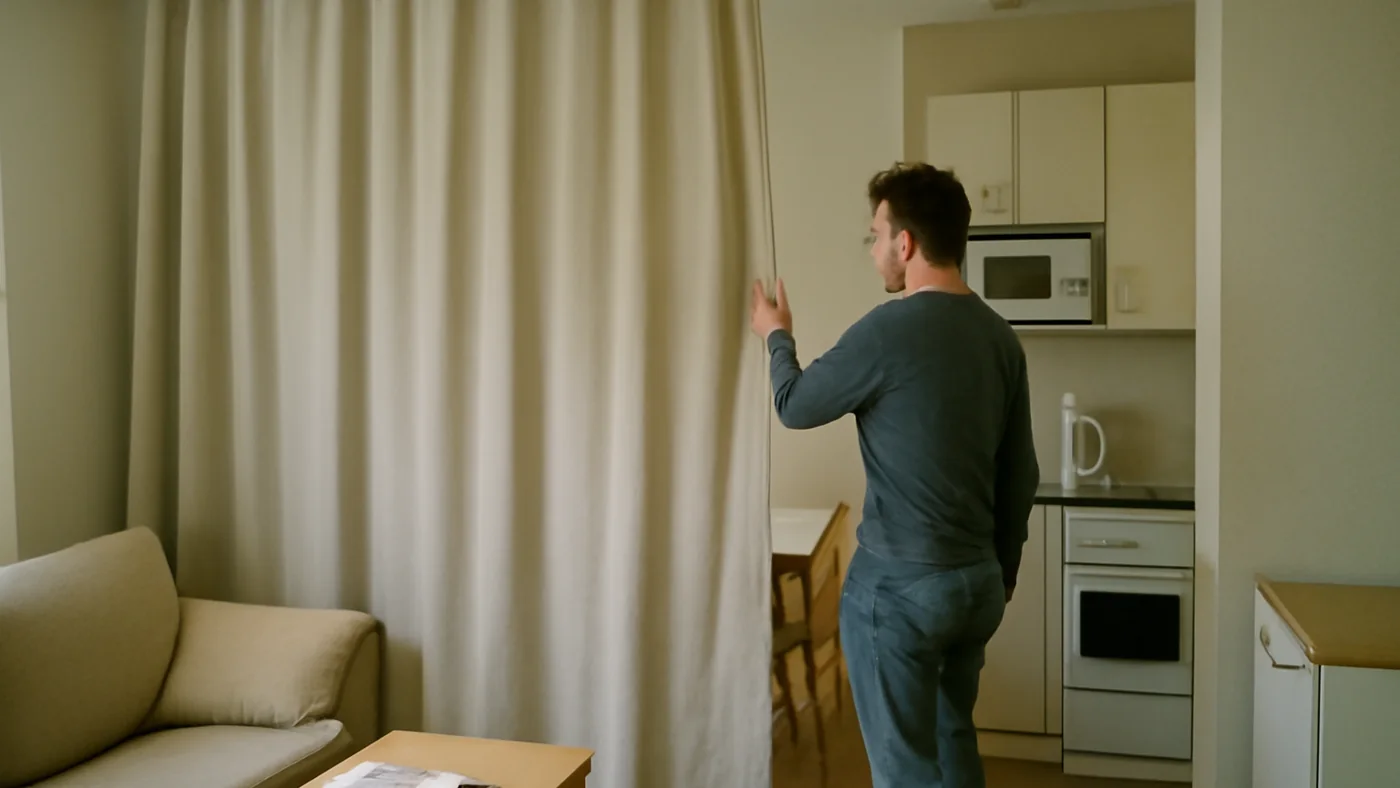
If you are comparing the best room divider curtains, start with the boring details first: opening width, mounting type, fabric weight, stack space, and whether the curtain still lets the room feel livable when closed.
This Wasmer-hosted guide supports the LeStallion roundup by looking at the layout decisions behind curtain dividers — the things that make a curtain feel intentional instead of like a temporary sheet across the room.
Start with the opening, not the curtain
The most common mistake is buying fabric before measuring how people actually pass through the room. Width, ceiling height, furniture swing, and where the curtain stacks all change the final result.
For room divider curtains, I would treat the curtain as flexible architecture: useful, soft, and forgiving, but still dependent on measurements and daily habits. The best setups look calm because they solve movement and storage first.
Think about opacity and weight
Light sheers divide visually but do little for privacy. Heavier woven fabric creates a stronger sense of separation, though it also needs stronger mounting and more room to stack.
For room divider curtains, I would treat the curtain as flexible architecture: useful, soft, and forgiving, but still dependent on measurements and daily habits. The best setups look calm because they solve movement and storage first.
Match the mounting to the lease
A ceiling track can look clean, but renters may need tension systems, removable brackets, or furniture-assisted layouts that do not damage surfaces.
For room divider curtains, I would treat the curtain as flexible architecture: useful, soft, and forgiving, but still dependent on measurements and daily habits. The best setups look calm because they solve movement and storage first.
Keep both sides useful
A divider curtain should create two usable zones rather than one hidden mess. Plan light, airflow, outlets, and walking paths before committing.
For room divider curtains, I would treat the curtain as flexible architecture: useful, soft, and forgiving, but still dependent on measurements and daily habits. The best setups look calm because they solve movement and storage first.
Buying checklist
- Measure ceiling height and full span.
- Decide whether drilling is allowed.
- Choose privacy level before pattern.
- Check how much fabric stacks at one side.
- Use the LeStallion room divider curtain recommendations with your room measurements beside you.
How to Measure for Room Divider Curtains Without Guesswork
A focused supporting note for curtain-divider planning.
Read this noteCeiling Tracks, Tension Rods, and Wall Mounts Compared
A focused supporting note for curtain-divider planning.
Read this noteFabric Weight and Privacy: What Actually Changes the Feel
A focused supporting note for curtain-divider planning.
Read this noteRoom Divider Curtain Ideas for Studio Apartments
A focused supporting note for curtain-divider planning.
Read this noteRental-Friendly Curtain Divider Setups
A focused supporting note for curtain-divider planning.
Read this noteRoom Divider Curtain Mistakes That Make a Space Feel Messy
A focused supporting note for curtain-divider planning.
Read this noteRoom divider curtain FAQs
Are curtains better than folding screens?
Curtains are softer and easier to open fully, while folding screens move faster and do not need mounting.
Do they help with privacy?
Yes, especially opaque or lined fabrics, but privacy depends on gaps at the sides and bottom.
Can renters use them?
Often yes, if the setup uses tension rods, removable brackets, or furniture-based layouts.
Do they reduce noise?
They can soften room reflections a little, but they are not true soundproof barriers.
Related guide: Soundproof room divider planning notes.
A separate plan for storing paperwork
The next guide moves from dividing a room to storing files. It considers filing cabinets for home or office use rather than another curtain or screen option: